Table of Contents
About Jesus Christ
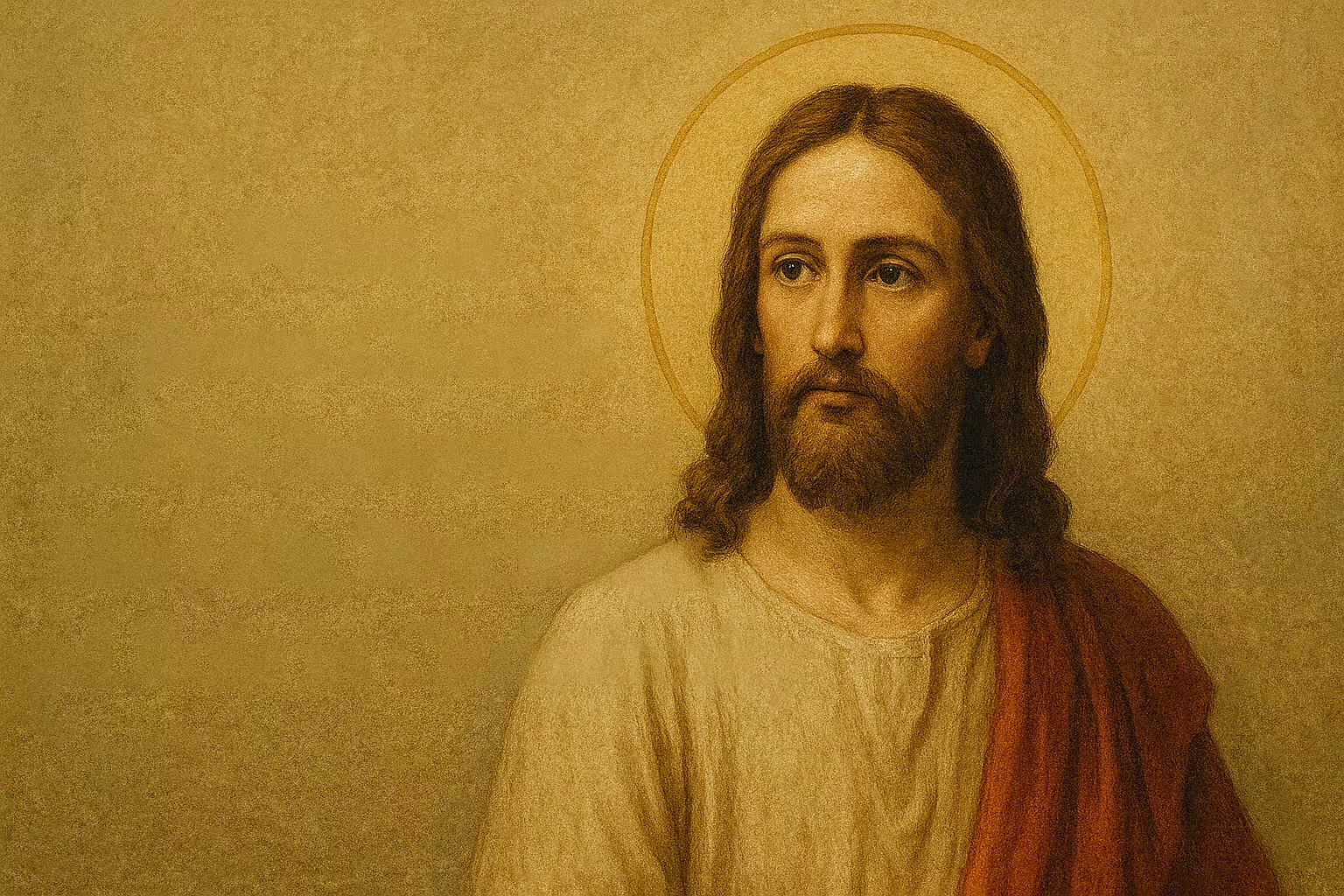
Jesus Christ is one of the most influential and revered figures in human history. Central to the Christian faith, He is believed by billions to be the Son of God, the Savior of humanity, and the embodiment of divine love and truth. But who was He, really? What did He teach? And why does His life continue to impact people around the world today? This article explores the life, teachings, and enduring role of Jesus Christ in Christianity, offering both historical insights and spiritual context.
His message has crossed centuries, languages, and cultures, shaping global moral philosophy, social reform, and spiritual yearning. To understand Jesus is to encounter not just a religious icon but a transformative presence whose influence spans both the sacred and secular spheres of human life. From the arts and literature to modern law and ethics, the fingerprints of Christ’s teachings remain unmistakable.
Whether viewed through the lens of faith, history, or spirituality, Jesus Christ stands as a cornerstone in the human story—His legacy one of compassion, sacrifice, and eternal hope.
Historical Background of Jesus Christ
Jesus was born in Bethlehem, a small town in Judea (modern-day Israel/Palestine), likely between 6 BCE and 4 BCE during the rule of King Herod. He was a Jewish preacher and religious leader who lived during the early Roman Empire. Historical references to Jesus can be found not only in the New Testament of the Bible but also in non-Christian sources such as the Jewish historian Flavius Josephus and the Roman historian Tacitus, providing extra-biblical support for His existence.
He lived in Nazareth and was raised by Mary and Joseph. As a carpenter by trade, He grew up in humble circumstances, which reflect His later teachings on humility and simplicity. At around age 30, He began His public ministry, traveling across Galilee and Judea. His message—calling for repentance, love, humility, and devotion to God—quickly gathered followers as well as critics. His radical approach to faith challenged the religious elite and disturbed the political authorities.
According to the Gospel of John, His ministry is estimated to have lasted about three years, though the Synoptic Gospels suggest a shorter period before He was crucified in Jerusalem under the Roman governor Pontius Pilate. Despite its tragic appearance, His crucifixion became the symbol of redemption and forgiveness in Christian theology. His life, though brief in public, sparked a movement that would forever change the religious and cultural course of the world.
The Birth and Early Life of Jesus
Christians believe that Jesus was born of a virgin, Mary, through divine conception by the Holy Spirit—a miracle that signifies the purity and divine origin of Christ. His birth, marked by simplicity and divinity, is celebrated globally as Christmas. The nativity story, featuring shepherds, angels, and the Magi (wise men), underscores God’s connection with all people—rich and poor, educated and uneducated, Jew and Gentile.
Though the Gospels offer limited details about Jesus’ early life, one notable event stands out: at the age of 12, He was found in the temple in Jerusalem, conversing with religious scholars and amazing them with His understanding. This moment is seen by many as an early sign of His divine wisdom and self-awareness of His mission.
These formative years, though veiled in obscurity, laid the spiritual and moral foundation for the compassionate and authoritative teacher He would become. His youth is often cited as a model of obedience, humility, and spiritual readiness.
His Teachings: Message of Love, Forgiveness, and Salvation
Jesus’ teachings were radical, revolutionary, and refreshingly inclusive. Centered around the Kingdom of God, He emphasized inner purity, heartfelt repentance, and genuine compassion over ritualistic observance. He taught that the Kingdom of Heaven is near and accessible to all who believe, regardless of social or religious status.
He often used parables—simple yet profound stories—to explain complex spiritual truths. Stories like the Prodigal Son, the Good Samaritan, and the Lost Sheep reflect His call to forgiveness, mercy, and boundless love.
Among His most famous teachings:
- “Love your enemies and pray for those who persecute you.” (Matthew 5:44)
- “Blessed are the meek, for they shall inherit the earth.” (Matthew 5:5)
- “I am the way, the truth, and the life. No one comes to the Father except through Me.” (John 14:6)
His Sermon on the Mount remains one of the most comprehensive blueprints for Christian ethics, covering themes such as humility, generosity, prayer, fasting, and forgiveness. Jesus’ teachings continue to inspire and challenge people to live lives marked by love, grace, and righteousness.
Miracles and Ministry
Jesus’ ministry was not limited to words; it was also marked by extraordinary acts of power and compassion. These miracles—from healing the sick to calming storms, casting out demons, feeding multitudes, and even raising the dead—served multiple purposes: they alleviated human suffering, revealed His divine identity, and affirmed His message.
He chose 12 disciples, often understood to symbolically represent the twelve tribes of Israel, to walk with Him, learn from Him, and carry His teachings forward. These men were not scholars or elites but everyday people—a testament to Jesus’ commitment to inclusiveness.
His ministry reached out to those marginalized by society: tax collectors, prostitutes, lepers, foreigners, and others deemed impure or unworthy. By welcoming them, He redefined holiness as relational, merciful, and accessible. He uplifted women, honored children, and embraced the downtrodden.
Jesus’ interactions often exposed the hypocrisy of the religious elite and stirred resistance among political leaders. Yet, it was His commitment to truth, grace, and justice that won the hearts of the multitudes.
Crucifixion and Resurrection
The final chapter of Jesus’ earthly life is marked by both suffering and triumph. Betrayed by Judas Iscariot, arrested in the Garden of Gethsemane, and abandoned by many of His followers, Jesus faced mockery, torture, and a humiliating public execution.
According to Christian belief, His crucifixion was not a defeat but a victory—a divine act of redemption where Jesus bore the sins of humanity. The crucifixion is central to Christian theology because it reveals both the depth of human brokenness and the height of divine love.
On the third day, He rose again—a miracle celebrated as the Resurrection. The empty tomb, appearances to His disciples, and transformation of a terrified group into bold proclaimers of faith attest to the reality of this event.
The Resurrection is not merely a doctrinal point but a living hope. It signifies new life, ultimate justice, and the assurance that death is not the end. Easter Sunday, the celebration of this miracle, is the pinnacle of the Christian liturgical calendar.
Ascension and the Promise of Return
After His resurrection, Jesus spent 40 days teaching and preparing His disciples for their mission. He then ascended into heaven in their presence, promising to send the Holy Spirit to guide and empower them.
The Ascension affirmed Jesus’ divine authority and foreshadowed His return. Christians believe that Jesus will one day return to judge the living and the dead, establishing a new heaven and new earth where righteousness dwells.
This promise of the Second Coming fuels hope, accountability, and perseverance among believers. It challenges them to remain faithful, love justice, and await the fulfillment of God’s ultimate plan.
The Role of Jesus Christ in Christianity Today
Today, Jesus remains at the heart of Christian life and identity. Christians look to Him not only as a historical figure but as a living Lord and personal Savior. He is worshiped, loved, and followed in churches, homes, and hearts around the world.
He is believed to be the source of grace, the model of holiness, and the embodiment of God’s will. Through prayer, scripture, and community, believers seek to grow in their relationship with Him and to reflect His character in their lives.
His message influences not only religious life but also art, science, human rights, education, and humanitarian efforts. The cross, once a symbol of shame, has become a symbol of hope, and His life continues to guide individuals and societies toward love, forgiveness, and purpose.
Different Christian Denominations’ Perspectives on Jesus
All Christian denominations affirm the central role of Jesus, but their interpretations vary:
- Catholic and Orthodox traditions emphasize continuity through apostolic succession, the sacraments, and the authority of Church tradition. They see Jesus as present in the Eucharist, working through the saints and the liturgy.
- Protestant traditions, emerging from the Reformation, stress the primacy of Scripture, justification by faith, and the priesthood of all believers. Jesus is the one mediator, and personal faith in Him is the path to salvation.
- Evangelical Christians focus on a personal relationship with Jesus, the authority of the Bible, and evangelism. They believe in the need for personal conversion or being “born again.”
Despite doctrinal distinctions, all agree on the core: Jesus Christ as God incarnate, crucified, risen, and returning.
Summary
To understand Jesus Christ is to engage with one of history’s most significant and sacred figures. Whether one approaches Him as a believer, historian, seeker, or student, His life offers a unique and profound vision of love, truth, and salvation.
His message has the power to heal wounds, bridge divides, and inspire change. In a world often torn by conflict and confusion, the words and actions of Jesus remain a beacon of hope.
He is not confined to churches or creeds but speaks to the deepest human longing for purpose, forgiveness, and eternal connection with God. The legacy of Jesus Christ continues—alive in Scripture, echoed in worship, and manifest in the lives of those who follow Him.
References:
- The Holy Bible (New Testament)
- Flavius Josephus, “Antiquities of the Jews”
- Tacitus, “Annals”
- Britannica.com – Jesus Christ Biography
- GotQuestions.org – Who Is Jesus Christ?
- BibleGateway.com
- The Oxford Companion to the Bible
- Eerdmans Dictionary of the Bible
Note: This article is for informational and spiritual educational purposes, respecting all beliefs and encouraging interfaith understanding.