Jesus Christ, the Savior of the world, was born in Bethlehem of Judea, a small town located a few miles south of Jerusalem. The story of His birth—often called the Nativity—is a profound narrative of miraculous intervention, deep humility, and divine love. It is not merely a historical event, but the foundation of the Christian faith, marking the moment when God took on human flesh to dwell among His creation.

Image by Freepik
The Significance of Bethlehem: Where Was Jesus Born?
The exact location of Jesus’ birth was not a coincidence; it was the fulfillment of divine prophecy. Hundreds of years before the Nativity, the prophet Micah foretold that the Messiah would come from this specific, seemingly insignificant town.
Micah 5:2 declares: “But you, Bethlehem Ephrathah, though you are small among the clans of Judah, out of you will come for me one who will be ruler over Israel, whose origins are from of old, from ancient times.”
Bethlehem, which translates to “House of Bread,” was also known as the City of David. Because Joseph, the earthly father of Jesus, belonged to the lineage of King David, he was required to travel to Bethlehem. At the time, the Roman Emperor Caesar Augustus had decreed a census across the Roman world. This political decree was orchestrated by God’s providence to bring Mary, who was heavily pregnant, from their home in Nazareth precisely to Bethlehem to fulfill the ancient prophecy.
The Story of His Birth: A Humble Arrival
The narrative of Jesus’ birth is primarily found in the Gospels of Matthew and Luke. It begins with the Annunciation, where the angel Gabriel appeared to a virgin named Mary, telling her she had found favor with God and would conceive a child by the Holy Spirit. Joseph, her betrothed, was also visited by an angel in a dream, confirming the miraculous nature of Mary’s pregnancy and instructing him to name the child Jesus, meaning “The Lord saves.”
The Journey and the Manger
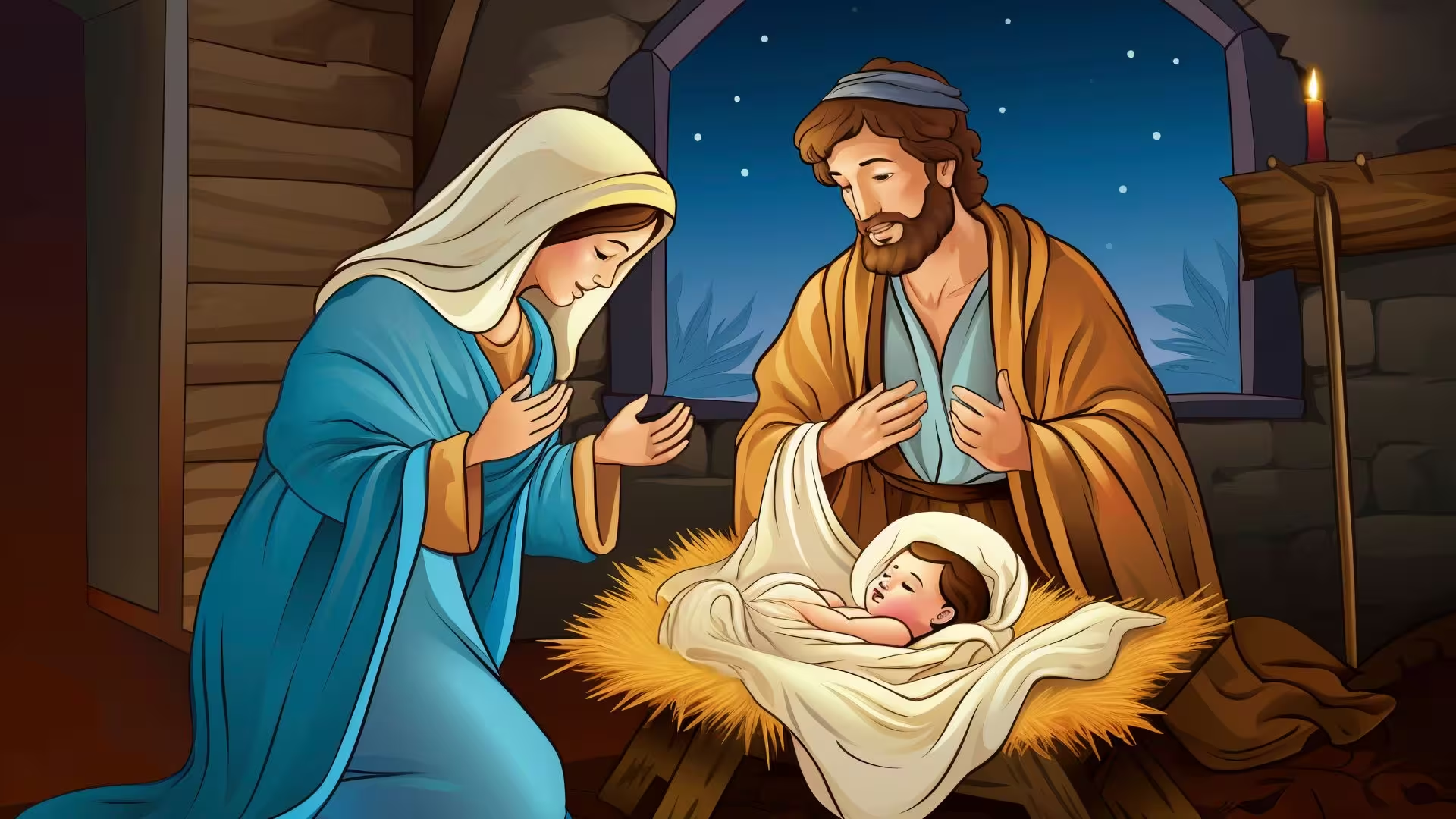
Upon arriving in Bethlehem after a grueling journey from Nazareth, Mary and Joseph found that the town was overflowing with travelers. The Gospel of Luke records the poignant reality of their arrival: “And she gave birth to her firstborn, a son. She wrapped him in cloths and placed him in a manger, because there was no guest room available for them” (Luke 2:7).
The King of Kings was not born in a grand palace or surrounded by royalty. Instead, the Son of God made His entrance into the world in a humble setting, likely a cave or a stable where animals were kept. His first bed was a feeding trough (a manger). This profound humility demonstrates that Jesus came not for the elite and powerful, but for the lowly, the broken, and the everyday person.
The Announcement to the Shepherds
God chose to announce the birth of His Son not to kings or religious leaders, but to ordinary shepherds watching their flocks by night in the fields nearby. An angel of the Lord appeared to them, bringing “good news that will cause great joy for all the people” (Luke 2:10). The angel instructed them to find the baby wrapped in swaddling cloths and lying in a manger. Suddenly, a vast heavenly choir joined the angel, praising God and saying, “Glory to God in the highest heaven, and on earth peace to those on whom his favor rests.” The shepherds immediately hurried to Bethlehem, found the Holy Family, and became the first evangelists, spreading the word concerning the child.
The Visit of the Magi
Sometime after His birth, Wise Men (Magi) from the East arrived in Jerusalem, seeking the one born “King of the Jews.” They had seen His star rise and came to worship Him. King Herod, threatened by this news, secretly plotted against the child. The star guided the Magi directly to the house where Jesus was now staying. They bowed down and worshiped Him, presenting prophetic and valuable gifts:
- Gold (acknowledging His kingship)
- Frankincense (acknowledging His deity and priestly role)
- Myrrh (a spice used for burial, foreshadowing His sacrificial death)
The Spiritual Importance of Jesus’ Birth
The story of where Jesus was born and how He arrived carries immense spiritual weight for believers today.
- The Reality of Immanuel: The birth of Jesus is the realization of the name “Immanuel,” which means “God with us” (Matthew 1:23). God did not remain distant from human suffering and struggle; He entered into it completely.
- A Savior is Provided: The entire purpose of Jesus’ birth was to secure salvation for humanity. He was born to bear the weight of human sin, bridge the gap between God and man, and offer eternal life.
- The Value of Humility: The Creator of the universe chose the path of ultimate vulnerability—becoming a helpless infant in a dusty stable. This teaches believers that God’s kingdom operates on love, humility, and service, rather than worldly power and status.
Real-Life Application: Making Room for Jesus
The historical reality that there was “no room in the inn” for Jesus serves as a vital spiritual metaphor. Today, practicing the truth of the Nativity means evaluating our own hearts.
- Prepare a Space: Just as Mary and Joseph sought a place for the Savior to be born, we must ask ourselves if we have made room in our busy lives, our schedules, and our hearts for Jesus.
- Embrace Humility: We are called to follow the example of Christ by letting go of pride and embracing a posture of service toward others.
- Worship Joyfully: Like the shepherds who glorified God, and the Magi who traveled vast distances to offer their best gifts, we are called to seek Jesus diligently and offer Him our worship, our time, and our lives.
A Prayer of Gratitude for the Birth of Christ
Heavenly Father, I thank You for the incredible gift of Your Son, Jesus Christ. Thank You that He was not born in an unapproachable palace, but in a humble manger in Bethlehem, making Himself accessible to all of us. Help me to truly comprehend the miracle of Immanuel—God with us. Forgive me for the times I have allowed the busyness of life to crowd You out. Today, I intentionally make room in my heart for You. Teach me to walk in the humility of Christ and to joyfully share the good news of His salvation with the world, just as the shepherds did. In Jesus’ holy and precious name, Amen.
Read Also : Who Is Jesus Christ? Let’s Understand His Life, Teachings, and Role in Christianity
References
- Holy Bible: Gospel of Matthew, Chapters 1–2; Gospel of Luke, Chapters 1–2
- Britannica: Birth of Jesus
- UNESCO: Church of the Nativity, Bethlehem
Cover image designed by Freepik – www.freepik.com